
Cyberbullying: Knowing Your Rights

Editor's note: This post was originally published on April 12, 2022, and has been updated for accuracy, comprehensiveness, and freshness on April 7, 2026.
Key takeaways:
- Cyberbullying is painful and harmful, especially to young people, but it can happen to anyone.
- Cyberbullying can escalate to more serious situations like stalking.
- There are many different state-level laws around cyberbullying.
- Victims of cyberbullying can file civil lawsuits for monetary damages.
- Speaking to a lawyer is the best way to understand your rights and options.
- In order to take action, victims and their families need to know who the bully is.
Online bullying can have a powerful impact on mental and physical health. Victims can feel ashamed and embarrassed, making it difficult to talk about.
It’s easy to overlook cyberbullying because it doesn’t happen in a real place, but the damage is very real. Teens are common victims, but online bullying can happen to anyone. There’s no shame in being a victim at any age.
If you or someone you love is a victim of cyberbullying, it’s best to seek remedies instead of hoping bullies will stop on their own. Cyberbullying can continue or escalate, causing long-lasting harm.
In this guide, we'll explain what counts as cyberbullying, when it crosses the line into criminal or civil territory, and what you can do to protect yourself or your family.
What is cyberbullying?
Cyberbullying is repeated harmful behavior that happens through digital platforms. It can take place on social media, in online games, through text messages, email, or anywhere else people interact digitally.
Here are a few examples of cyberbullying:
- Sending threatening messages through texts or DMs
- Spreading lies or hurtful messages about someone via social media posts
- Organizing private chats or groups for purposes like spreading rumors behind someone’s back
- Leaving hurtful comments on someone's posts or videos over and over
The harassment doesn’t have to happen in the “real” world to have a real impact. Some studies show links between cyberbullying and suicide.
If your child is dealing with ongoing harassment, learning how social media affects teens can help you recognize when it's time to take action.
What are the consequences of cyberbullying?
Cyberbullying can cause harm even without rising to the level of a crime. Even adults, business owners, and celebrities can be victims.
For victims, cyberbullying can contribute to:
- Exclusion from social or professional participation
- Reputational harm
- Pressure to engage in unsafe behavior
- Prolonged feelings of embarrassment, shame, or fear
- Anxiety or depression
- Suicidal ideation or attempts
Cyberbullying can also escalate into dangerous abuses against victims, like stalking, extortion, or even violence.
If you feel like you’re in danger, call 911.
Is cyberbullying illegal?
Cyberbullying covers a range of behavior patterns. While it’s not always illegal, most states have laws about it. Whether, and exactly when, cyberbullying is illegal varies by state.
Being rude online, like leaving insulting comments on a post, usually isn't against the law. Even if it’s highly offensive. But if someone repeatedly targets you with bullying after you’ve asked them to stop, it might be illegal.
The key difference is whether the activity is generally unpleasant (not usually illegal) or repeatedly targeted at an individual to cause harm (potentially illegal).
Cyberbullying might be illegal when it involves:
- Harassment: Repeated, unwanted contact meant to scare, demean, or cause distress to someone
- Threats: Messages that threaten physical harm or violence
Civil and criminal laws covering bullying and harassment vary by state. If it rises to the level of a crime, cyberbullying is often covered under existing anti-harassment laws.
What can cyberbullying victims do?
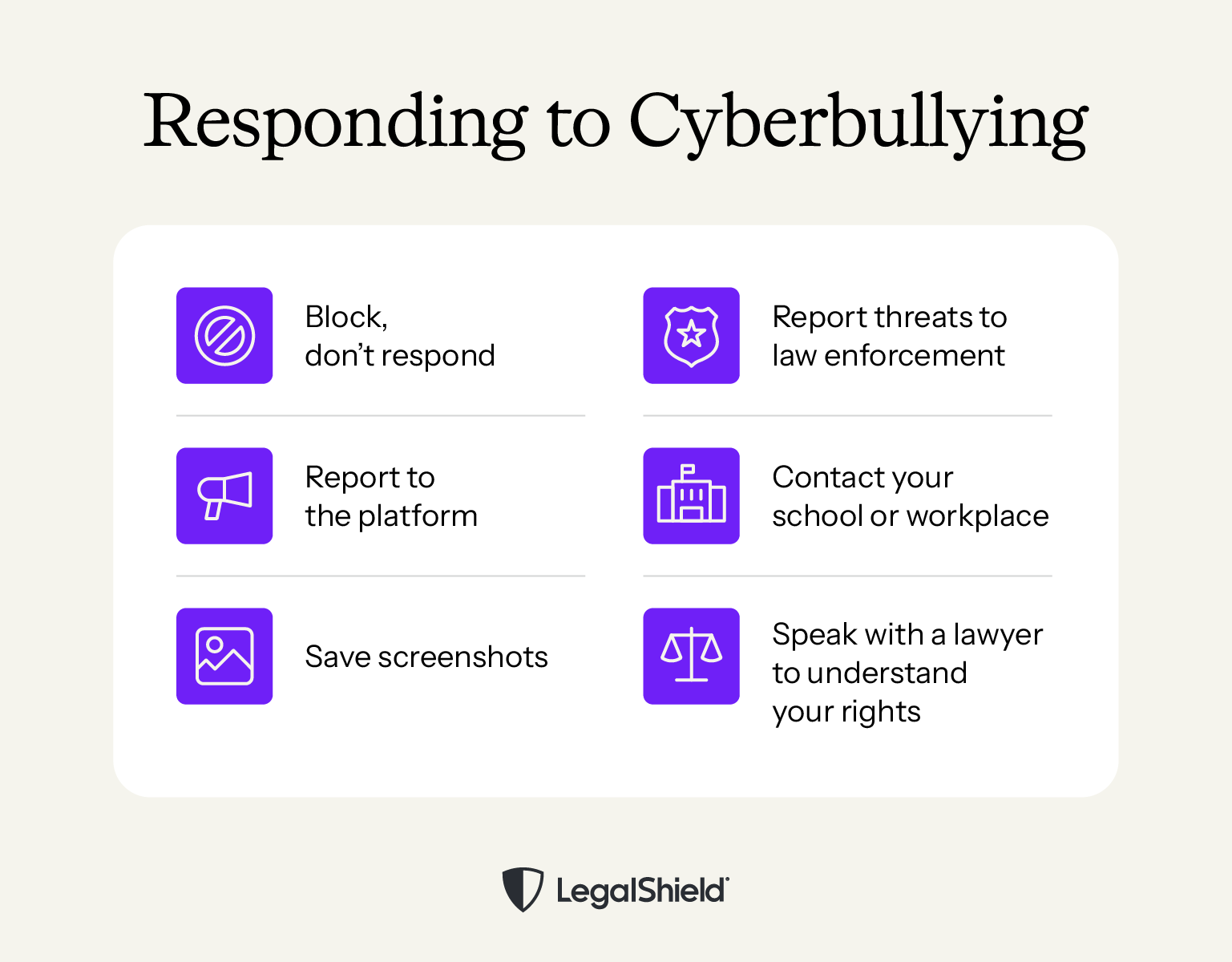
If you’re being bullied, you have a few options depending on the severity of the behavior. Take these initial steps to try to prevent ongoing behavior and build a case for legal remedies if you need them:
- Report it to the platform: Instagram, TikTok, Snapchat, and other apps all have ways to report harassment. Look at the platform's rules so you know exactly what to flag.
- Block the bully: Use blocking features to cut off contact. If you think they're using anonymous accounts, report those too.
- Document everything: Save screenshots of every harmful message. These can be used as evidence if you need to take further action.
But you don’t have to handle it alone. If you need help with bullying, you should reach out. There’s no shame in asking for help, even if you’re not sure whether you’re being bullied.
- Talk to your school or workplace: Both are usually required to address harassment, and have rules or codes of conduct around social media.
- Talk to a lawyer about civil remedies: You may be able to get a restraining order or sue in civil court.
- Contact local law enforcement: If the bullying is severe and includes threats of harm, contact law enforcement. If you think someone is in danger, call 911.
If you’re a parent concerned about your child being cyberbullied, it can be difficult to get them to open up about it.
When your kids are young, you can use platform-enabled parental controls to monitor how they use social media. However, depending on the platform and your location, these controls may disappear as they become teenagers. This can make it more difficult to notice cyberbullying.
Protecting your kids from cyberbullying starts with letting them know it’s okay to talk and help is available.
If cyberbullying is a problem for your child, you can contact relevant authorities on their behalf.
You can also learn more about ways to stop cyberbullying on social media before it gets worse.
Getting support from your school or workplace
Many states require schools to take action to address cyberbullying, even if the bullying happens outside of school. Teachers and administrators can step in, so it’s a good idea to contact them. If your child is being cyberbullied by school peers, you can reach out on their behalf.
School staff may have specialized anti-bullying training so that they can intervene safely. This also helps build documentation if you need to seek other remedies.
On the other hand, cyberbullying at work could be a serious workplace harassment issue. Many companies have strict harassment policies that cover what employees do online, even on their own time. Reaching out to human resources is a good first step if a coworker or manager makes you uncomfortable.
Getting relief in civil court
Even if it doesn’t rise to the level of a crime, victims of cyberbullying may be able to sue. If the bullying caused harm, you may be able to get:
- Injunctive relief: A civil court orders the bully to stop taking specific actions. Restraining orders can be difficult to get, so you should seek a lawyer’s help. Some states have added special rules that make it easier to obtain a court order to stop bullying.
- Compensation for damages: The bully (or their parents) pays for financial loss, emotional distress, or medical expenses.
Suing someone can be a difficult and lengthy process. It often requires extensive documentation of a pattern of harmful behavior.
Talking to a lawyer is a good first step to understanding whether it makes sense to try to take someone to court. If the bullying is serious enough, you may be able to get financial compensation. Here are some examples:
- Defamation: Spreading lies about someone that hurts their reputation
- Doxxing: While it’s generally not illegal to publish information about a person, if someone does it with the intent to harm you or cause you distress, there may be legal remedies available
- Financial damages: If bullying causes you to lose business, miss work, or pay for therapy, you may be able to recover some of that money.
Civil cases won't land anyone in jail, but they can lead to financial penalties and create an official record of the behavior.
With a LegalShield Legal Plan, you can connect with a lawyer to talk about your situation, including whether you have grounds to file a claim.
Filing criminal charges
When cyberbullying is particularly severe or part of a crime like stalking, you may be able to get relief by asking law enforcement to bring criminal charges.
Depending on the state and how serious the behavior is, penalties for criminal behavior related to cyberbullying may include:
- Misdemeanor charges, which can carry fines and up to a year in jail
- Felony charges for more extreme cases, like death threats
- Probation or community service, especially for first-time or juvenile offenders
- A permanent criminal record, which can affect job prospects and college applications
State-specific cyberbullying law examples
Cyberbullying regulations are handled at the state level, which means there’s no one-size-fits-all law or definition. Most states have specific laws about cyberbullying.
In some states, it’s easier to seek help from a court to prevent bullies from contacting you or your child.
Here are three examples of state-specific regulations:
- California: Certain kinds of severe cyber harassment may be misdemeanors. Schools can also suspend or expel students for serious cyberbullying, and by July 2027, every district must have a policy covering off-campus cyberbullying.
- Texas: David's Law, named after a 16-year-old who ended his own life after being harassed online, requires schools to address cyberbullying even when it happens outside of school. Victims under 18 or their parents can also ask a court to order the bullying to stop without having to prove they're in immediate danger.
- Florida: The Jeffrey Johnston Stand Up for All Students Act, named after a 15-year-old who ended his own life after being cyberbullied, requires every public K-12 school to have anti-bullying policies in place.
LegalShield members can talk to a provider lawyer as part of their Legal Plan to understand what actions are available and figure out potential next steps.

LegalShield connects you with lawyers so you can be informed about your rights
You don't have to figure this out alone. A lawyer can tell you whether you have enough evidence to take legal action, what protections your state offers, or how to get a restraining order against the person harassing you.
Learn how to stop cyberbullying and take the first step toward protecting yourself or your family. Review LegalShield's legal plans to connect with a lawyer today.
LegalShield is a trademark of Pre-Paid Legal Services, Inc. (“LegalShield”). LegalShield provides this blog as a public service and for general information only. The information made available in this blog is meant to provide general information and is not intended to provide legal advice, render an opinion, or provide a recommendation as to a specific matter. The blog post is not a substitute for competent legal counsel from a licensed professional lawyer in the state or province where your legal issues exist, and you should seek legal counsel for your specific legal matter. All information by authors is accepted in good faith. However, LegalShield makes no representation or warranty of any kind, express or implied, regarding the accuracy, adequacy, validity, reliability, availability, or completeness of such information. The materials contained herein are not regularly updated and may not reflect the most current legal information. No person should either act or refrain from acting on the basis of anything contained on this website. Nothing on this blog is meant to, or does, create an attorney-client relationship with any reader or user. An attorney-client relationship may be formed only after the execution of an engagement letter with an attorney and after that attorney has confirmed that no conflicts of interest exist. Nothing on this website, or information contained or transmitted by this website, is intended to be an advertisement or solicitation. Information contained in the blog may be provided by authors who could be a third-party paid contributor. LegalShield provides access to legal services offered by a network of provider law firms to LegalShield members through membership-based participation. LegalShield is not a law firm, and its officers, employees or sales associates do not directly or indirectly provide legal services, representation, or advice.

How Does a Divorce Work? 10 Steps That Explain the Process

Should I Get a Prenup? 7 Reasons To Sign Before Saying Your Vows
